

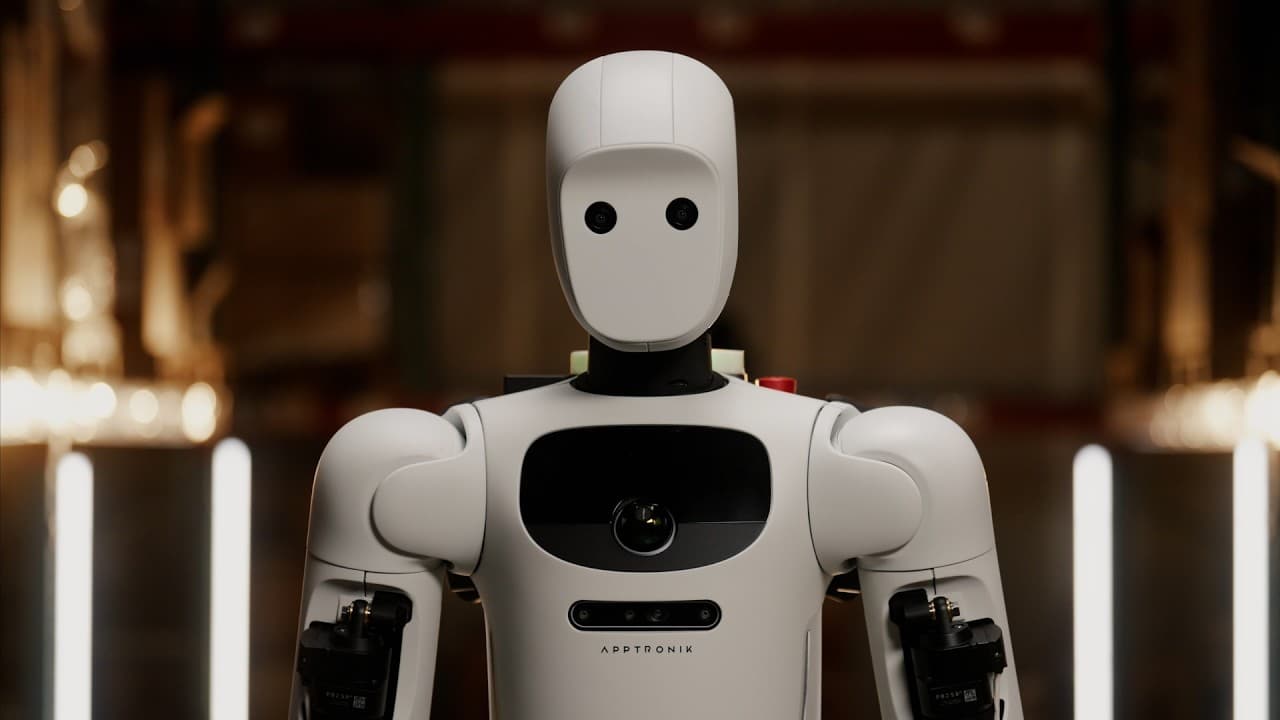
 Apollo 2Apptronik source ↗
Robot Comparison · Interactive
Apollo 2 vs G1
A symmetrical comparison using normalized manufacturer-reported specifications. Green highlights mark the stronger value only where the specification has a defensible direction.
Apollo 2Apptronik source ↗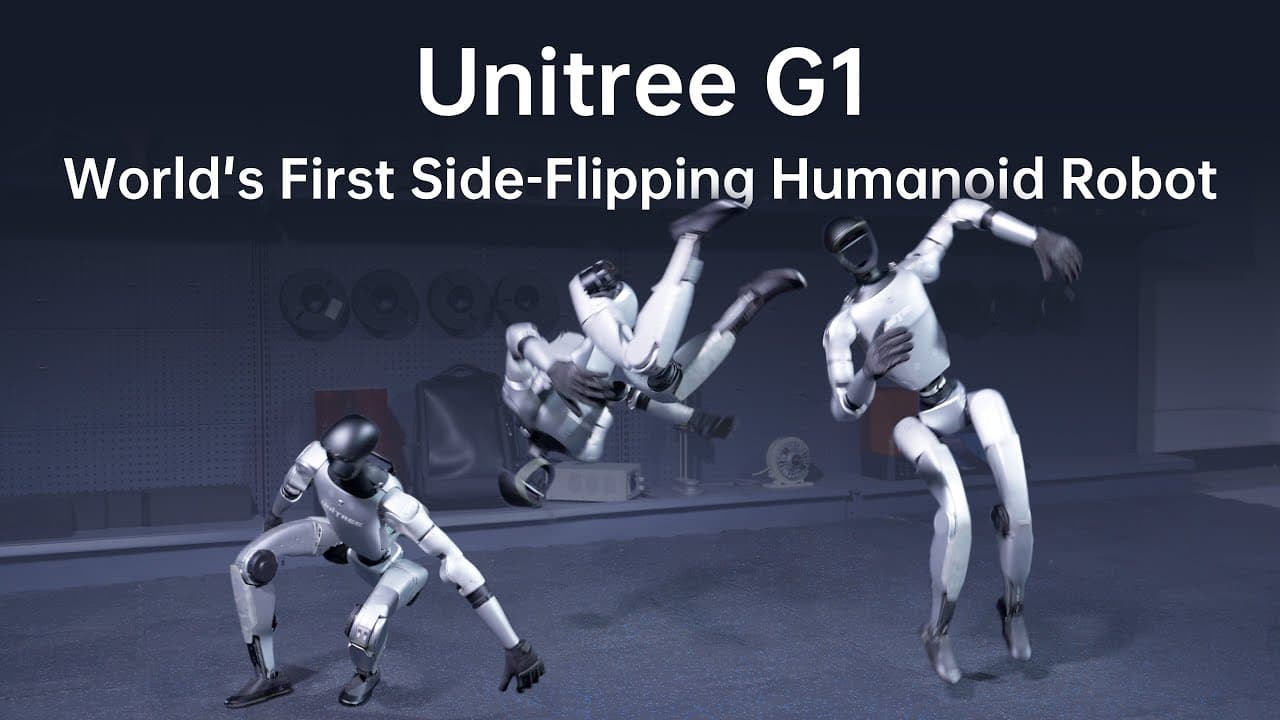 G1Unitree Robotics source ↗


Technical Differences
Side-by-Side Specifications
Interactive only
| Field | Apollo 2 | G1 |
|---|---|---|
| Manufacturer | Apptronik | Unitree Robotics |
| Version | 2 | G1 base |
| Form factor | Humanoid | Humanoid |
| Availability | Select customers | Commercially available |
| Primary use | Industrial manipulation and logistics | Humanoid research and development |
| Starting price | Unknown | 13500 |
| Price qualifier | Contact sales | Base price; tax and shipping excluded |
| Height (m) | Unknown | 1.32 |
| Weight (kg) | Unknown | 35 |
| Payload (kg) | Unknown | 2 |
| Runtime (hours) | Unknown | 2 |
| Maximum speed (m/s) | Unknown | Unknown |
| Degrees of freedom | Unknown | 23 |
| Reach (m) | Unknown | Unknown |
| Battery | Swappable batteries with opportunity-charging and tethering options | 9,000 mAh quick-release lithium battery |
| Sensors | perception system, speech and listening hardware | depth camera, 3D LiDAR, four-microphone array |
| Onboard compute | Not disclosed | 8-core CPU; optional high-compute modules on EDU |
| Software | Artemis, Fleet Connect, Gemini Robotics integration | OTA updates, EDU secondary-development interface |
| Safety | hardware safety zones, impact-zone stop, configurable perimeter zone | manufacturer warns users to maintain a safe distance |
| Control modes | autonomous | manual controller, imitation learning, reinforcement learning |
| Target applications | goods-to-person, person-to-goods, packout, kitting, machine tending | research, education, embodied AI |
13 comparable fields · 12 material differences · Interactive comparison only; editorial indexing gate not met
Apollo 2 Positioning
Primary useIndustrial manipulation and logistics
AvailabilitySelect customers
Starting priceContact sales
Canonical IDapptronik/apollo-2
G1 Positioning
Primary useHumanoid research and development
AvailabilityCommercially available
Starting priceUSD 13,500
Canonical IDunitree/g1
Primary Evidence
Manufacturer Sources and Freshness
Apptronik Apollo 2Apptronik · observed Aug 29, 2026Unitree G1 product specificationsUnitree Robotics · observed Aug 29, 2026
Browse every robotics model, robot platform, and curated comparison →
Questions
Apollo 2 vs G1 FAQs
Which is better, Apollo 2 or G1?+
There is no defensible overall robot winner without a target task and environment. Compare form factor, availability, payload, runtime, speed, sensing, control, safety, and price; green highlights apply only to specifications with an explicit direction.
Which can carry more, Apollo 2 or G1?+
A direct answer is unavailable because Apollo 2 does not publish a normalized payload (kg) in the current source.
Which runs longer, Apollo 2 or G1?+
A direct answer is unavailable because Apollo 2 does not publish a normalized runtime (hours) in the current source.
Which is faster, Apollo 2 or G1?+
A direct answer is unavailable because Apollo 2 does not publish a normalized maximum speed (m/s) in the current source.
Which costs less, Apollo 2 or G1?+
A normalized price comparison is unavailable. Apollo 2: Contact sales. G1: Base price; tax and shipping excluded.
Can I buy Apollo 2 or G1 today?+
Apollo 2 is recorded as select customers (Apptronik invites deployment inquiries; no public price or delivery schedule is cited.); G1 is commercially available (The manufacturer publishes a base price; secondary development is reserved for the EDU configuration.). Availability can be regional or customer-specific.
What are Apollo 2 and G1 designed to do?+
Apollo 2: Industrial manipulation and logistics. G1: Humanoid research and development.
What sensors do Apollo 2 and G1 use?+
Apollo 2: perception system, speech and listening hardware. G1: depth camera, 3D LiDAR, four-microphone array.
What software and control options do Apollo 2 and G1 support?+
Apollo 2: Artemis, Fleet Connect, Gemini Robotics integration. G1: OTA updates, EDU secondary-development interface. Apollo 2: autonomous. G1: manual controller, imitation learning, reinforcement learning.
Are Apollo 2 and G1 the same type of robot?+
Yes. Both are categorized as humanoid platforms, though their intended use and specifications may differ.