

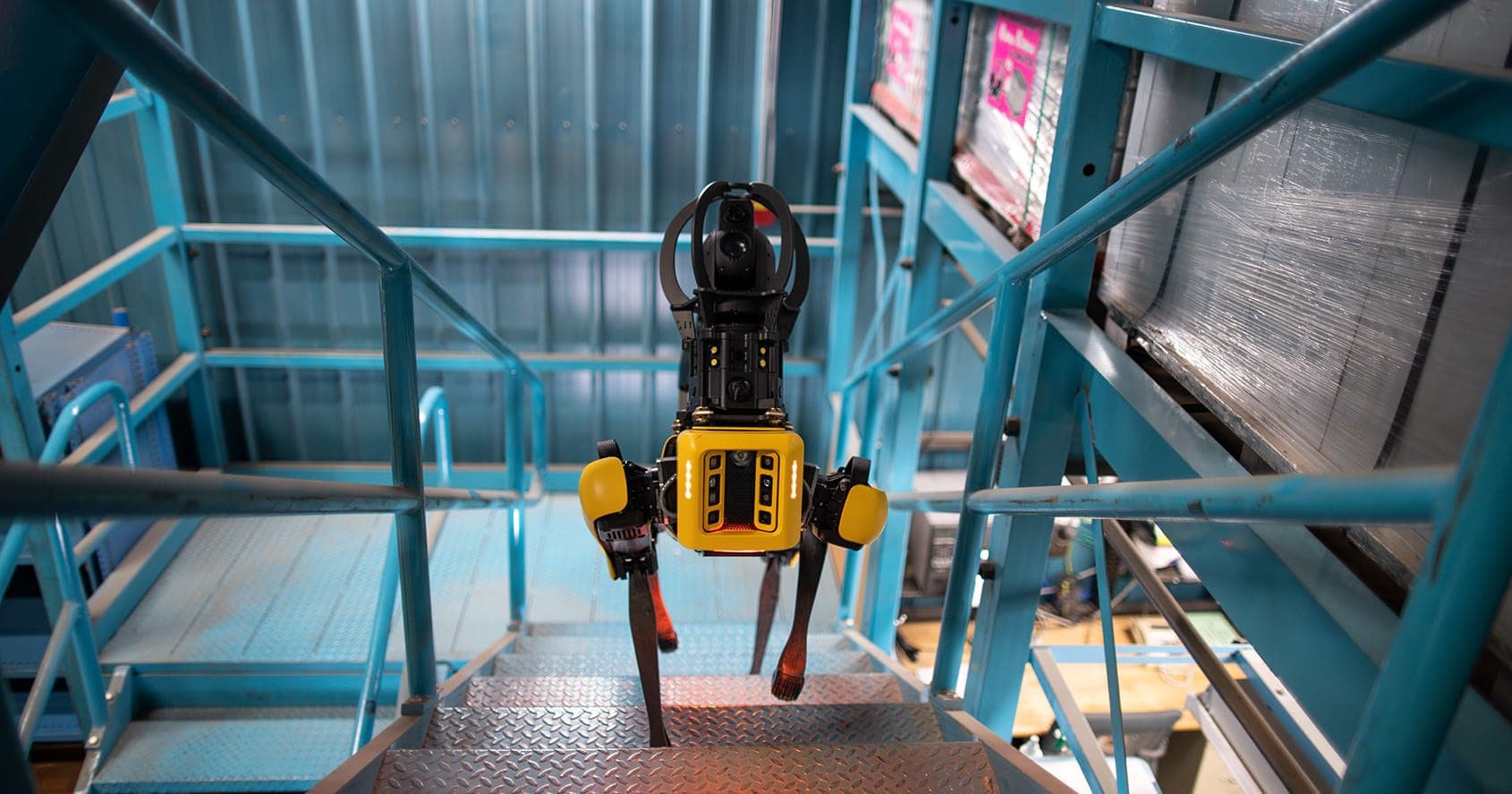
 SpotBoston Dynamics source ↗
Robot Comparison · Interactive
Spot vs X30
A symmetrical comparison using normalized manufacturer-reported specifications. Green highlights mark the stronger value only where the specification has a defensible direction.
SpotBoston Dynamics source ↗ X30DEEP Robotics source ↗


Technical Differences
Side-by-Side Specifications
Interactive only
| Field | Spot | X30 |
|---|---|---|
| Manufacturer | Boston Dynamics | DEEP Robotics |
| Version | Unknown | Unknown |
| Form factor | Quadruped | Quadruped |
| Availability | Commercially available | Commercially available |
| Primary use | Industrial inspection and remote sensing | Industrial inspection and emergency operations |
| Starting price | Unknown | Unknown |
| Price qualifier | Contact sales | Contact sales |
| Height (m) | 0.61 | 0.47 |
| Weight (kg) | 33.8 | 56 |
| Payload (kg) | 14 | Unknown |
| Runtime (hours) | 1.5 | 2.5 |
| Maximum speed (m/s) | 1.6 | 4 |
| Degrees of freedom | 12 | 12 |
| Reach (m) | Unknown | Unknown |
| Battery | Swappable battery; approximately 90 minutes average runtime | Replaceable battery; manufacturer states approximately 2.5 to 4 hours |
| Sensors | five stereo camera pairs, 360-degree perception, optional inspection payloads | 360-degree perception, LiDAR, depth cameras, optional inspection payloads |
| Onboard compute | Onboard autonomy computer with payload integration | Industrial autonomy computer |
| Software | Spot Autonomy, Scout, Orbit | autonomous navigation, inspection mission software |
| Safety | obstacle avoidance, automatic self-righting, IP54 enclosure | IP67 enclosure, operation from -20 to 55 degrees Celsius, automatic recovery |
| Control modes | autonomous missions, remote tablet control | autonomous missions, remote control |
| Target applications | asset inspection, digital twins, hazardous-site monitoring, public safety | power inspection, emergency rescue, industrial inspection, security patrol |
17 comparable fields · 13 material differences · Interactive comparison only; editorial indexing gate not met
Spot Positioning
Primary useIndustrial inspection and remote sensing
AvailabilityCommercially available
Starting priceContact sales
Canonical IDboston-dynamics/spot
X30 Positioning
Primary useIndustrial inspection and emergency operations
AvailabilityCommercially available
Starting priceContact sales
Canonical IDdeep-robotics/x30
Primary Evidence
Manufacturer Sources and Freshness
Spot robot specificationsBoston Dynamics · observed Aug 29, 2026DEEP Robotics X30 product specificationsDEEP Robotics · observed Aug 29, 2026
Browse every robotics model, robot platform, and curated comparison →
Questions
Spot vs X30 FAQs
Which is better, Spot or X30?+
There is no defensible overall robot winner without a target task and environment. Compare form factor, availability, payload, runtime, speed, sensing, control, safety, and price; green highlights apply only to specifications with an explicit direction.
Which can carry more, Spot or X30?+
A direct answer is unavailable because X30 does not publish a normalized payload (kg) in the current source.
Which runs longer, Spot or X30?+
X30 leads this specification: Spot is 1.5 hours and X30 is 2.5 hours.
Which is faster, Spot or X30?+
X30 leads this specification: Spot is 1.6 m/s and X30 is 4 m/s.
Which costs less, Spot or X30?+
A normalized price comparison is unavailable. Spot: Contact sales. X30: Contact sales.
Can I buy Spot or X30 today?+
Spot is recorded as commercially available (Boston Dynamics offers Spot through a sales inquiry and partner ecosystem.); X30 is commercially available (DEEP Robotics accepts commercial inquiries for X30 deployments.). Availability can be regional or customer-specific.
What are Spot and X30 designed to do?+
Spot: Industrial inspection and remote sensing. X30: Industrial inspection and emergency operations.
What sensors do Spot and X30 use?+
Spot: five stereo camera pairs, 360-degree perception, optional inspection payloads. X30: 360-degree perception, LiDAR, depth cameras, optional inspection payloads.
What software and control options do Spot and X30 support?+
Spot: Spot Autonomy, Scout, Orbit. X30: autonomous navigation, inspection mission software. Spot: autonomous missions, remote tablet control. X30: autonomous missions, remote control.
Are Spot and X30 the same type of robot?+
Yes. Both are categorized as quadruped platforms, though their intended use and specifications may differ.