

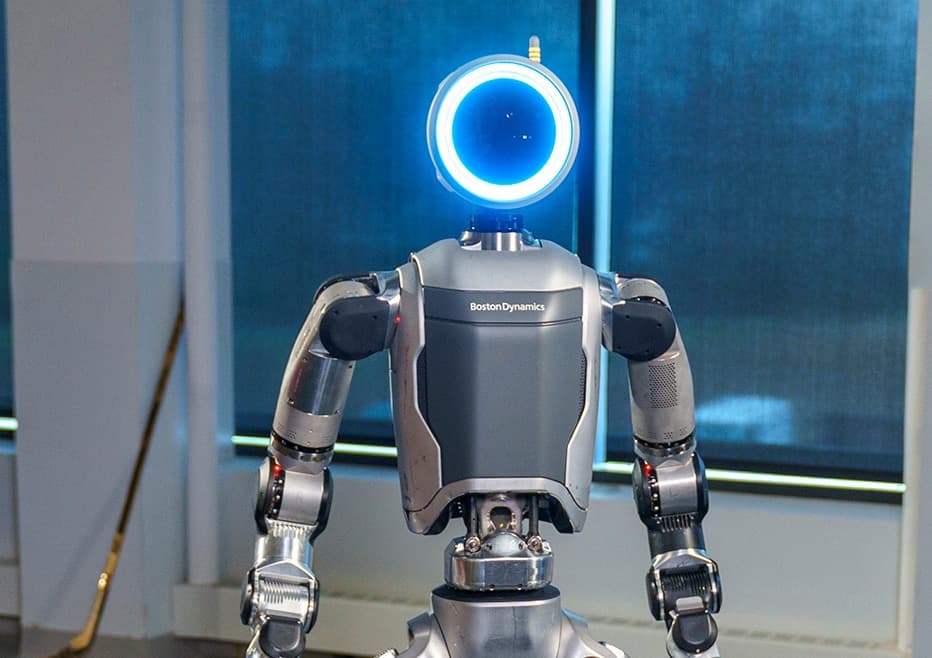
 AtlasBoston Dynamics source ↗
Robot Comparison · Interactive
Atlas vs Vision 60
A symmetrical comparison using normalized manufacturer-reported specifications. Green highlights mark the stronger value only where the specification has a defensible direction.
AtlasBoston Dynamics source ↗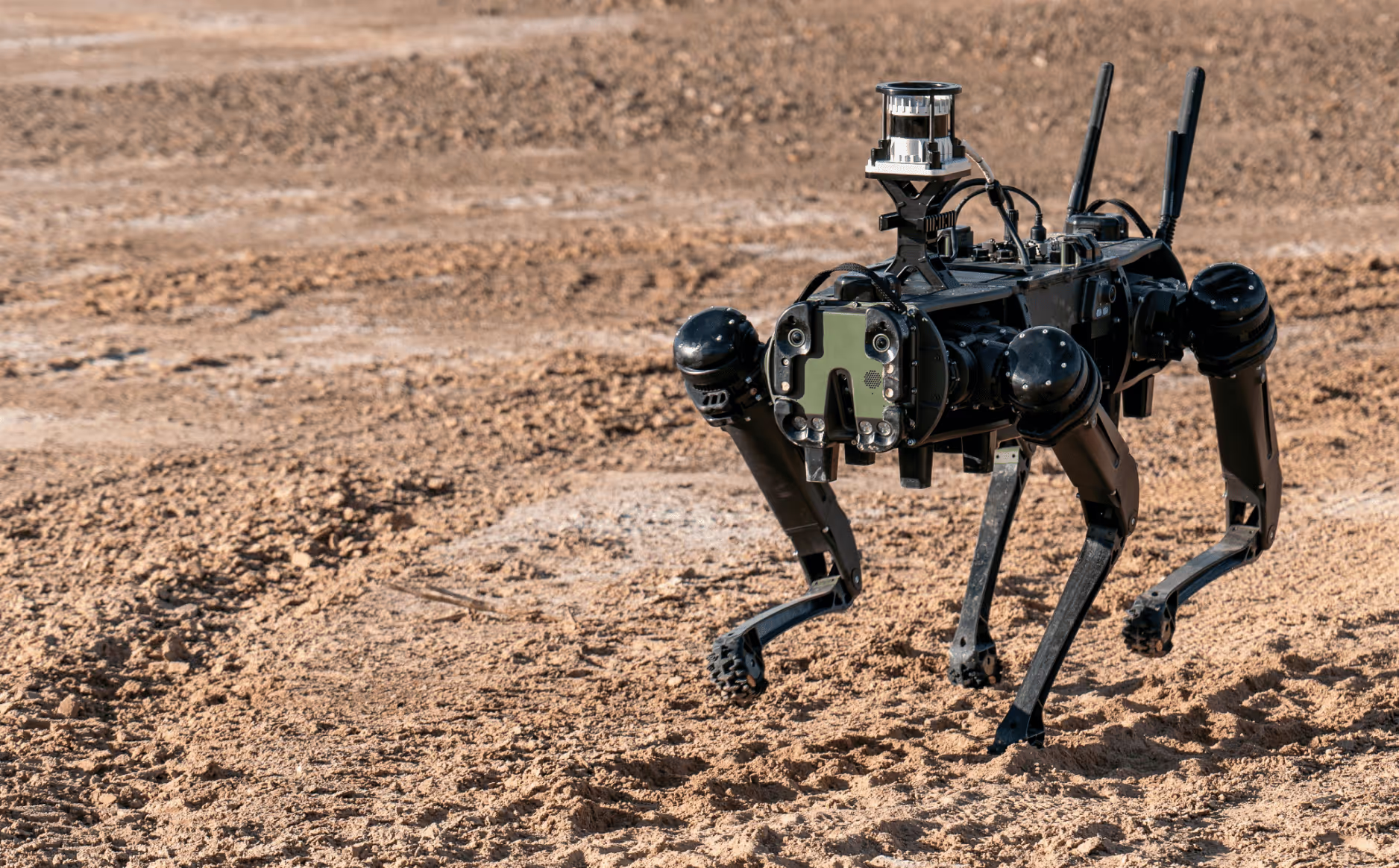 Vision 60Ghost Robotics source ↗
FieldAt a Glance

Boston Dynamics · Select customersAtlasHumanoid · verified Aug 29, 2026

Ghost Robotics · Commercially availableVision 60Quadruped · verified Aug 29, 2026
Cross-Category ComparisonThese platforms do not share a sourced form factor, use case, or editorial comparison rationale, but their normalized specifications remain available below.
Technical Differences
Side-by-Side Specifications
Interactive only
| Field | Atlas | Vision 60 |
|---|---|---|
| Manufacturer | Boston Dynamics | Ghost Robotics |
| Version | 2026 product version | Unknown |
| Form factor | Humanoid | Quadruped |
| Availability | Select customers | Commercially available |
| Primary use | Industrial material handling | Defense, public safety, and remote field operations |
| Starting price | Unknown | Unknown |
| Price qualifier | Contact sales | Contact sales |
| Height (m) | 1.9 | 0.685 |
| Weight (kg) | 90 | 51 |
| Payload (kg) | 30 | 10 |
| Runtime (hours) | 4 | 3.15 |
| Maximum speed (m/s) | Unknown | 2.4 |
| Degrees of freedom | 56 | 12 |
| Reach (m) | 2.3 | Unknown |
| Battery | Autonomous battery swap; 3-minute swap and 1.5-hour charge stated by the manufacturer | Hot-swappable battery; manufacturer states up to 3.15 hours continuous operation |
| Sensors | tactile fingers and palm, 360-degree camera view | day and night cameras, optional thermal sensing, modular payload interfaces |
| Onboard compute | Not disclosed | Modular onboard compute and payload architecture |
| Software | Boston Dynamics Orbit, MES integration, WMS integration | open API, autonomous navigation options |
| Safety | human detection, fenceless guarding, IP67, -20 C to 40 C operating range | IP67 enclosure, operation from -40 to 55 degrees Celsius, blind-mode mobility |
| Control modes | autonomous, VR teleoperation, tablet control | remote control, autonomous missions, developer control |
| Target applications | part sequencing, machine tending, order building, material handling | perimeter security, public safety, defense, hazardous-site inspection |
17 comparable fields · 16 material differences · Interactive comparison only; editorial indexing gate not met
Atlas Positioning
Primary useIndustrial material handling
AvailabilitySelect customers
Starting priceContact sales
Canonical IDboston-dynamics/atlas-2026
Vision 60 Positioning
Primary useDefense, public safety, and remote field operations
AvailabilityCommercially available
Starting priceContact sales
Canonical IDghost-robotics/vision-60
Primary Evidence
Manufacturer Sources and Freshness
Atlas humanoid robotBoston Dynamics · observed Aug 29, 2026Vision 60 quadruped specificationsGhost Robotics · observed Aug 29, 2026
Browse every robotics model, robot platform, and curated comparison →
Questions
Atlas vs Vision 60 FAQs
Which is better, Atlas or Vision 60?+
There is no defensible overall robot winner without a target task and environment. Compare form factor, availability, payload, runtime, speed, sensing, control, safety, and price; green highlights apply only to specifications with an explicit direction.
Which can carry more, Atlas or Vision 60?+
Atlas leads this specification: Atlas is 30 kg and Vision 60 is 10 kg.
Which runs longer, Atlas or Vision 60?+
Atlas leads this specification: Atlas is 4 hours and Vision 60 is 3.15 hours.
Which is faster, Atlas or Vision 60?+
A direct answer is unavailable because Atlas does not publish a normalized maximum speed (m/s) in the current source.
Which costs less, Atlas or Vision 60?+
A normalized price comparison is unavailable. Atlas: Contact sales. Vision 60: Contact sales.
Can I buy Atlas or Vision 60 today?+
Atlas is recorded as select customers (Boston Dynamics states that 2026 deployments are fully committed, with additional customers to follow.); Vision 60 is commercially available (Ghost Robotics offers Vision 60 through direct commercial and government engagement.). Availability can be regional or customer-specific.
What are Atlas and Vision 60 designed to do?+
Atlas: Industrial material handling. Vision 60: Defense, public safety, and remote field operations.
What sensors do Atlas and Vision 60 use?+
Atlas: tactile fingers and palm, 360-degree camera view. Vision 60: day and night cameras, optional thermal sensing, modular payload interfaces.
What software and control options do Atlas and Vision 60 support?+
Atlas: Boston Dynamics Orbit, MES integration, WMS integration. Vision 60: open API, autonomous navigation options. Atlas: autonomous, VR teleoperation, tablet control. Vision 60: remote control, autonomous missions, developer control.
Are Atlas and Vision 60 the same type of robot?+
No. Atlas is a humanoid platform; Vision 60 is a quadruped platform. Direct specification comparisons may therefore reflect different jobs.